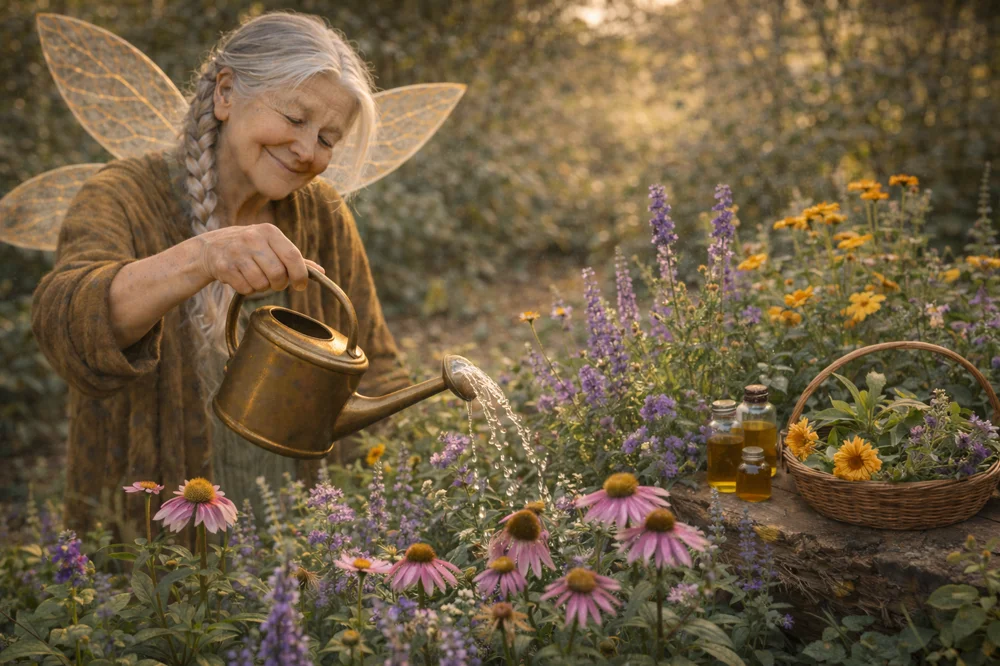
Part VI: Botanicals and Traditional Wisdom — What the Tooth Fairy Has Been Trying to Tell You
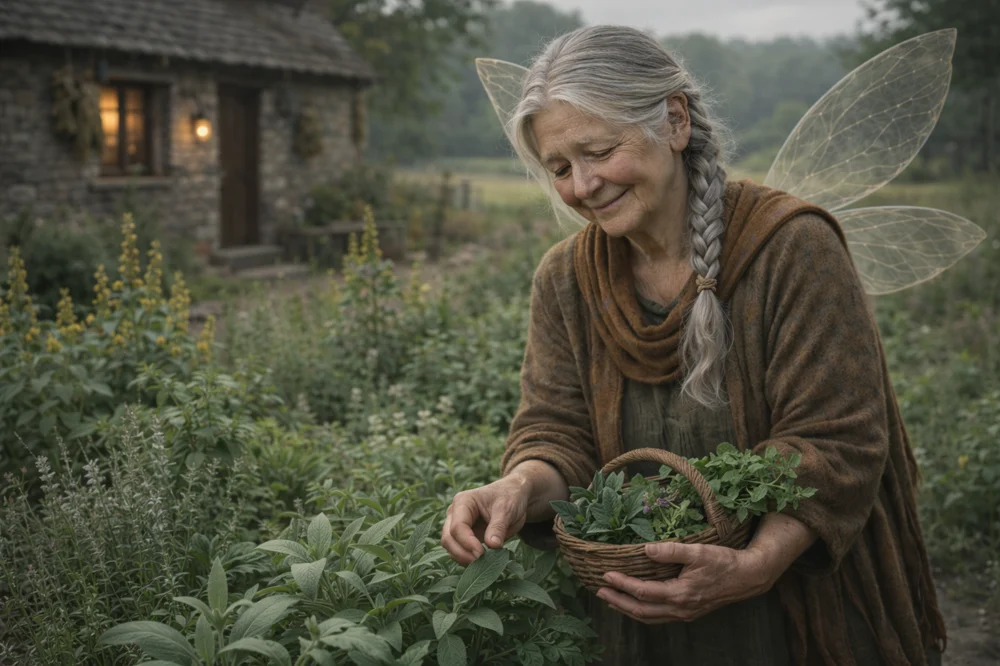
Finally. Finally we get to talk about the plants.
This is the work closest to my heart—the knowledge I tend in my own garden, the wisdom I've been trying to pass down since before your ancestors had names for these plants. When I'm not making midnight rounds collecting what remains of human negligence, this is where you'll find me: among the herbs, studying their chemistry, preparing their remedies.
I've been waiting for this section because, frankly, it's where my frustration runs deepest. I've watched humans use these remedies for millennia. I've seen the knowledge passed down through generations—grandmother to mother to daughter, healer to apprentice, tradition to tradition. I've watched the same plants appear independently in cultures separated by oceans and centuries, converging on the same solutions through independent observation.
And then I watched the modern era dismiss it all as "folk medicine." As if "folk" meant "foolish" rather than "accumulated practical wisdom of countless generations."
Don't misunderstand me. I'm not opposed to modern science—I've spent this entire book explaining mechanisms, citing studies, demanding evidence. The problem isn't science; it's the arrogance that assumed traditional knowledge was worthless until proven otherwise in a randomized controlled trial.
Here's the truth: many of these traditional remedies work. They work because plants evolved sophisticated chemical defenses over hundreds of millions of years. They work because humans, through trial and error across countless generations, figured out which plants helped which problems. They work because chemistry is chemistry, whether a compound was synthesized in a lab or extracted from a root.
In this section, we're going to explore the botanical pharmacy for oral health. I'll tell you what the evidence says—because evidence matters—but I'll also tell you what traditional use suggests, because tradition encodes information that formal studies haven't yet captured.
Some of these remedies have robust clinical trial support. Some have strong mechanistic plausibility with limited formal study. Some have extensive traditional use that's beginning to be validated. I'll be clear about which category each one falls into.
And I'll share some of my favorites—the plants that I've watched help humans across the centuries, the ones that I've been trying to whisper to you through intuition and inherited wisdom.
The plants have been waiting. Let's introduce you properly.