Introduction: Why You Keep Getting Cavities (Even Though You Brush)
Let me guess.
You brush your teeth. Twice a day, probably, or at least most days. You might even floss—occasionally, guiltily, usually the week before a dental appointment. You use that mouthwash, the one that makes your eyes water and your gums feel like they've been through chemical processing. You're doing what you're supposed to do.
And yet.
Every time you sit in that dental chair, under those merciless lights, with that tiny mirror poking around places you'd rather not think about, you hear it: "We've got a small cavity here." Or "This filling is starting to fail." Or "The decay has progressed, we're going to need to talk about options."
And you think: How? I'm doing everything right.
But here's the thing—and I say this with genuine compassion, because I've been watching this pattern for longer than I can express—you're not doing everything right. You're doing what you've been told to do, which is an entirely different thing. You've been given a set of instructions that are incomplete at best and counterproductive at worst, and then you've been blamed when they don't work.
It's not your fault. Not entirely. But it is something you can change.
The Bare Minimum Problem
I've watched for centuries as people do the bare minimum suggested by their healthcare systems—and wonder why they keep getting cavities.
Here's what I've observed about the bare minimum:
The "bare minimum" for oral health, as commonly understood, consists of:
- Brushing twice a day
- Maybe flossing
- Using some kind of mouthwash
- Visiting the dentist periodically
This routine is treated as a sort of checkbox exercise—do these things, and you've fulfilled your obligations to your teeth. If problems develop anyway, well, that's just genetics, or bad luck, or the mysterious workings of dental fate.
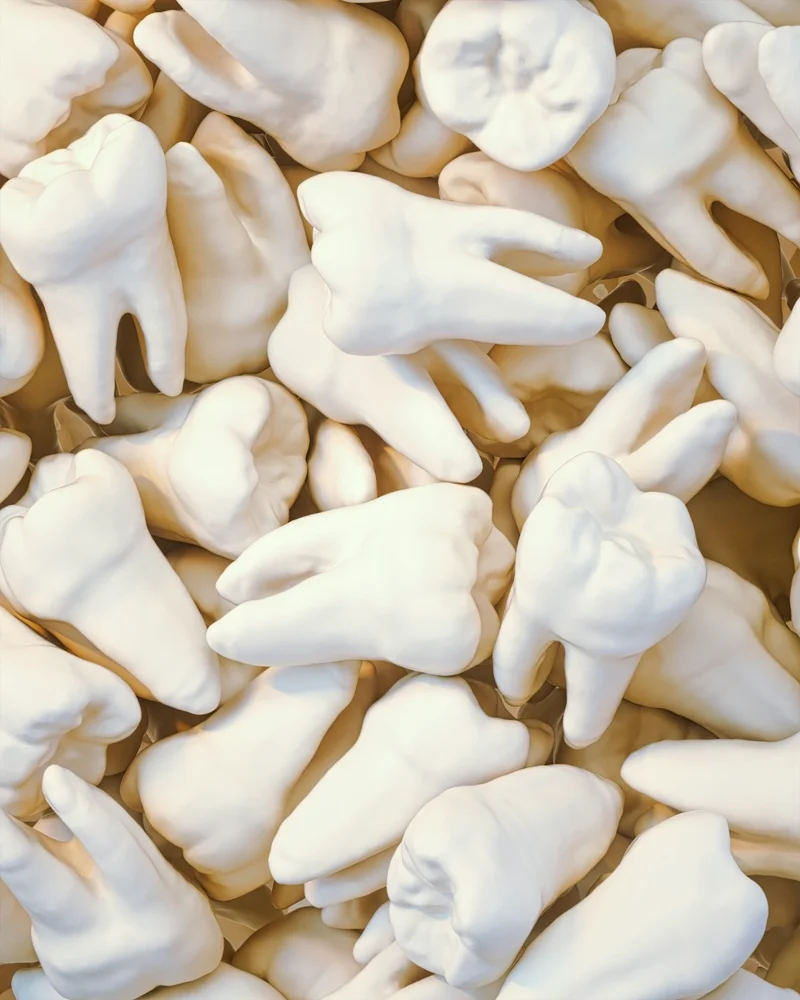
But teeth don't work like checklists. They work like ecosystems.
Your teeth aren't static objects that you clean and then forget about until the next cleaning. They're dynamic mineral structures engaged in a constant chemical conversation with their environment. Every hour of every day, they're either dissolving a little or rebuilding a little, and which direction they go depends on conditions you largely control—often without realizing it.
When you drink that sparkling water throughout the afternoon, you're making a choice (though probably not a catastrophic one). When you eat and then don't eat again for several hours, you're making a choice. When you use a mouthwash that kills bacteria indiscriminately, you're making a choice. When you brush immediately after eating something acidic, you're making a choice—and that one might actually be doing damage.
The "bare minimum" approach fails because it treats oral health as a simple input-output equation: do these things, get healthy teeth. But the real equation has dozens of variables, and some of the most important ones aren't even on the standard list of instructions.
What This Book Will Give You
Over the following chapters, I'm going to rebuild your understanding of oral health from the ground up. We'll start with the basics—what enamel actually is, how it dissolves and rebuilds, why saliva is far more important than you've ever been told. We'll explore the microbial ecosystem in your mouth, the hundreds of bacterial species engaged in a constant dance of competition and cooperation.
Then we'll examine how we got to our current approach—the history of dentistry, the rise of germ theory, the well-intentioned but oversimplified idea that oral health means killing as many germs as possible. You'll understand why the "scorched earth" approach felt logical at the time, and why the science has moved on even if the products on pharmacy shelves haven't.
We'll look at what actually causes damage: acid, yes, but more importantly the patterns of acid exposure. Sugar, yes, but more importantly the frequency of sugar exposure. Bacteria, yes, but more importantly which bacteria gain dominance and why.
I'll teach you about the herbs and plants that your ancestors used—not as quaint historical curiosities, but as sources of compounds that modern science is increasingly validating. Sage, ginger, clove, the remarkable miswak tree. Propolis from bees. Green tea. Even licorice, which turns out to have surprising anti-cavity properties. These aren't alternatives to science; they're the origins of science, waiting to be rediscovered.
I'll give you practical formulations: a simple salt and baking soda rinse that works with your oral ecosystem rather than against it. Herbal preparations for specific purposes. Ways to use modern tools like water flossers to deliver these solutions where they're actually needed.
And I'll explain the frontier of modern dental science: how nano-hydroxyapatite from Japanese space research can help remineralize enamel, how probiotics for the mouth are an emerging field, how researchers are even developing genetically modified bacteria that could one day provide permanent protection against cavities.
The Promise
By the time you finish this book, you'll understand your mouth in a way you never have before. You'll know why certain habits matter and others are mostly theater. You'll have specific, actionable protocols based on both ancient wisdom and modern evidence. You'll be equipped to make real choices—not just follow instructions that were handed down from toothpaste marketing departments.
And, I hope, you'll stop getting cavities.
Or at least, you'll stop getting cavities that were preventable, which is most of them. You'll understand what you can control and what you can't. You'll have a relationship with your teeth that's based on understanding rather than guilt and mystery.
Most importantly, you'll stop being the person who does everything "right" but still ends up in that dental chair wondering what went wrong.
Because here's the secret that took me millennia of observation to fully articulate: the people who keep their teeth aren't necessarily the ones who follow the rules most diligently. They're the ones who understand the game. They're the ones who see their mouths as ecosystems rather than problems to be managed. They're the ones who work with the remarkable biological systems evolution gave them rather than constantly fighting against them.
That's what I want to teach you.
That's why I wrote this book.
And that's why, if you take it seriously, I might finally get back to my garden—to the herbs and the teaching and the work I was meant to do.
Turn the page. Let's begin with the crystal that lives in your mouth—the remarkable, resilient, constantly-rebuilding structure called enamel. Understanding it is the first step to keeping it.