Chapter 37: The Long Game — Oral Health in the Later Years
In which we address the unique challenges of aging mouths, debunk the myth that tooth loss is inevitable, and offer hope even to those who may have already given up
I have a confession: I've been collecting teeth from elderly humans for so long that many assume it's simply the natural order of things. Teeth come in, teeth wear out, teeth come out. The denture, they believe, is as inevitable as the gray hair.
It isn't.
I've watched centenarians die with full sets of natural teeth. I've watched people lose their last tooth at 50. The difference isn't genetics nearly as much as people assume. It's the accumulation of decades of habits—and, crucially, it's never too late to change the trajectory.
If you're reading this in your 60s, 70s, 80s, or beyond, I want you to know something important: the teeth you have now can last the rest of your life. Not through heroic effort, but through understanding what your aging mouth needs and providing it.
Let me tell you what changes, and what to do about it.
The Aging Mouth: What Actually Changes
Saliva: The Disappearing Protector
This is the big one. Everything else flows from this.
Salivary function declines with age—not as dramatically as once believed, but significantly in many individuals. More importantly, medications commonly prescribed to older adults often cause dry mouth (xerostomia) as a side effect.1
The culprits include:
- Antihypertensives (blood pressure medications)
- Antidepressants (especially tricyclics and SSRIs)
- Antihistamines (allergy and cold medications)
- Diuretics (fluid pills)
- Antipsychotics
- Anti-Parkinson's drugs
- Muscle relaxants
- Opioid pain medications
The average 65-year-old takes 4-5 prescription medications. Many take more. When multiple xerostomic drugs combine, the effect can be profound.
Why does this matter so much? Remember everything we discussed about saliva in the earlier chapters:
- Buffering: Saliva neutralizes acids. Without it, every acid exposure does more damage.
- Remineralization: Supersaturated saliva deposits minerals back into enamel. Reduced saliva means reduced repair.
- Clearance: Saliva washes away food debris and bacteria. Dry mouths retain harmful substances longer.
- Antimicrobial: Saliva contains immunoglobulins, lysozyme, lactoferrin. Less saliva means less immune protection.
A dry mouth is a mouth in crisis. If you take medications that cause dry mouth, managing this side effect becomes your top oral health priority.
Root Surfaces: The Newly Vulnerable Territory
As gums recede—from age, from past periodontal disease, sometimes from decades of overly aggressive brushing—the root surfaces of teeth become exposed.
This matters enormously because root surfaces are not enamel. They're covered by cementum, which is thinner and less mineralized. Beneath that is dentin, which is more porous and more susceptible to acid attack than enamel.
The critical pH for root surface demineralization is around 6.2-6.7—significantly higher than the 5.5 for enamel.2 This means acids that wouldn't damage enamel can dissolve root surfaces. The protective margin shrinks.
Root caries (cavities on root surfaces) are the signature dental disease of older adulthood. They're sneaky—often appearing at the gumline, spreading sideways around the tooth, sometimes progressing rapidly. They're also harder to restore than crown caries because the margins are often below the gumline and moisture control is challenging.
Gums: Decades of History
By the time you reach your later years, your gums have seen a lot. Past episodes of gingivitis, varying levels of care, perhaps some periodontal treatment—it all adds up.
Many older adults have:
- Recession: Gum tissue that has pulled back from where it once was
- Attachment loss: The periodontal ligament and bone supporting teeth may be diminished
- Pocketing: Spaces between teeth and gums where bacteria accumulate
The good news: periodontal disease is controllable at any age. The bad news: damage already done to supporting structures doesn't fully regenerate. You work with what you have.
The Teeth Themselves: Wear and Brittleness
Teeth that have been working for 60, 70, 80 years show it:
Wear: Chewing surfaces flatten. Enamel thins. Incisal edges wear down. This is normal—but it reduces the protective enamel layer and can alter the bite.
Brittleness: Dentin becomes more mineralized and less flexible with age. Teeth are more prone to fracture, especially teeth with large restorations.
Darkening: Teeth naturally yellow with age as enamel thins and dentin (which is yellower) shows through more. This is cosmetic, not pathological.
Pulp changes: The pulp chamber shrinks as secondary dentin is deposited throughout life. This can make root canals more challenging, but it also means the pulp is better protected.
Systemic Conditions: The Interconnections
Older adults often manage multiple health conditions that affect oral health:
Diabetes: Increases risk of periodontal disease; periodontal disease worsens glycemic control. The bidirectional relationship we discussed becomes increasingly important with age.
Cardiovascular disease: Shares inflammatory pathways with periodontitis. Medications may cause dry mouth.
Arthritis: May make brushing and flossing physically difficult. Grip strength and dexterity decline.
Cognitive decline: Dementia can cause neglect of oral hygiene routines that were once automatic.
Cancer treatment: Radiation to the head/neck can permanently damage salivary glands. Chemotherapy can cause mucositis and increase infection risk.
The Denture Myth
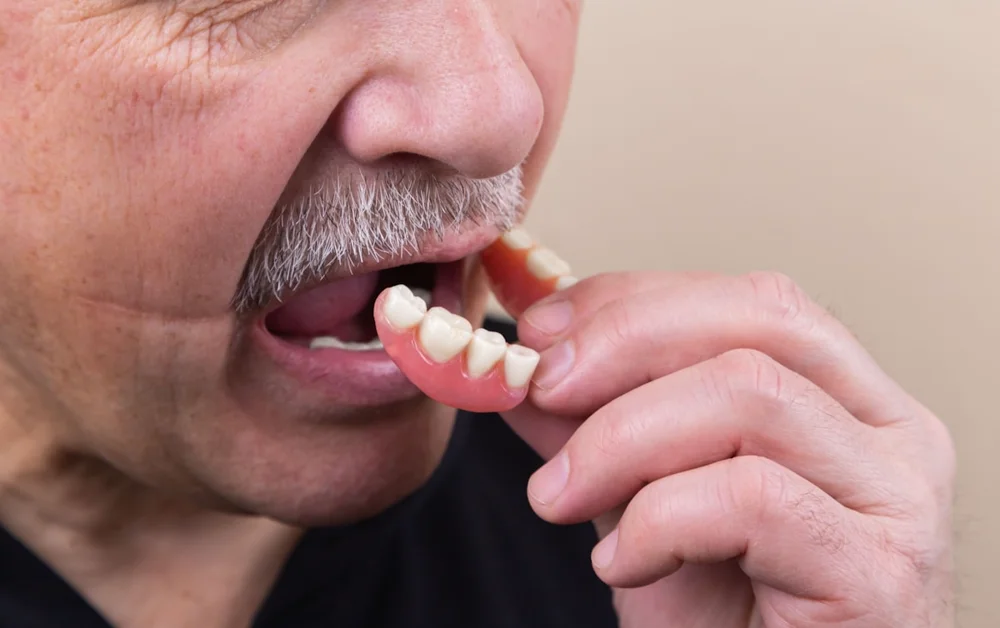
Let me address something that angers me: the assumption that dentures are just what happens when you get old.
Full dentures are a last resort, not a natural progression. They represent failure—of the dental system, of patient education, of access to care, of something. They should not be normalized.
Dentures are:
- Less efficient than natural teeth for chewing (roughly 25% efficiency compared to natural dentition)3
- Progressive accelerators of bone loss in the jaws
- Associated with nutritional deficiencies because people with dentures avoid certain foods
- Expensive to maintain over time (relining, replacing, adjusting)
- Psychologically difficult for many people
Every tooth you keep is a victory. Keeping even a few natural teeth—especially the canines—dramatically improves the success and stability of partial dentures compared to full dentures.
If you still have teeth, fight for them. If you've already lost some, fight for the ones that remain.
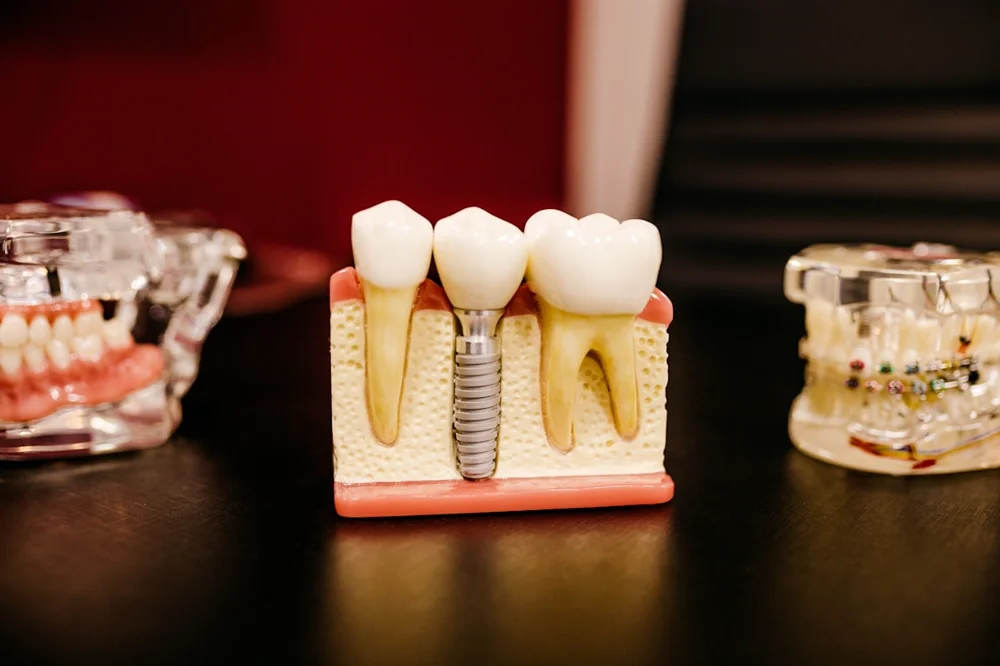
The Medications Conversation
Here's something that often doesn't happen but should: talk to your doctor about dry mouth.
Many older adults suffer silently with xerostomia, assuming it's just part of aging. They don't connect it to their medications. Or they assume nothing can be done.
In fact, several options exist:
Medication review: Sometimes an alternative medication in the same class causes less dry mouth. Sometimes the dose can be adjusted. Sometimes a medication can be discontinued entirely. Your physician won't know dry mouth is a problem unless you mention it.
Timing adjustments: Taking medications earlier in the day rather than at bedtime may reduce overnight dry mouth.
Artificial saliva products: Various sprays, gels, and rinses can provide temporary moisture. They don't replicate all saliva functions but they help.
Saliva stimulants: Prescription medications like pilocarpine (Salagen) or cevimeline (Evoxac) can stimulate salivary production in people who still have functional glands.4
Xylitol products: Xylitol gum and mints stimulate saliva while also providing antibacterial benefits.
Don't just accept dry mouth as inevitable. Advocate for yourself.
Practical Protocols for the Later Years
Managing Dry Mouth Daily
If you have xerostomia, these practices become essential:
Hydration: Sip water frequently throughout the day. Keep water at bedside for nighttime waking.
Humidity: A bedroom humidifier reduces overnight drying.
Avoid drying agents:
- Alcohol-based mouthwashes (use alcohol-free versions)
- Caffeine (increases dehydration)
- Tobacco (damages salivary glands)
- Mouth breathing (use nasal strips if needed)
Saliva substitutes: Apply before bed and as needed during the day. Look for products containing xylitol, which adds anticariogenic benefit.
The baking soda rinse: Our ecological standby becomes even more important. Baking soda neutralizes acids that your diminished saliva can't buffer effectively.
Xylitol throughout the day: Xylitol gum or mints after eating stimulate saliva while providing bacterial inhibition. Aim for 5-6 exposures daily.
Protecting Root Surfaces
With exposed root surfaces, you need extra protection:
Fluoride: This is one situation where fluoride becomes particularly valuable. Prescription-strength fluoride toothpaste (5000 ppm, such as Prevident or Clinpro 5000) can significantly reduce root caries risk.5 Apply at night and don't rinse after—let it work while you sleep.
Nano-hydroxyapatite: An excellent alternative for those who prefer to avoid fluoride. The same remineralizing principles apply; some evidence suggests n-HAp may be particularly effective on root surfaces.
CPP-ACP (MI Paste): Provides bioavailable calcium and phosphate. Apply to root surfaces after brushing.
Gentle brushing: Exposed root surfaces are softer than enamel. Use a soft brush, gentle pressure, and avoid aggressive scrubbing at the gumline.
Adapting to Physical Limitations
If arthritis, tremor, or reduced dexterity make oral hygiene difficult:
Electric toothbrushes: The larger handles are easier to grip. The oscillating/rotating motion does the work for you. For many older adults, switching to electric is transformative.
Modified handles: Commercial grip aids or simply wrapping a toothbrush handle with foam tubing can make gripping easier.
Floss aids: Floss holders, picks, or interdental brushes require less dexterity than traditional floss.
Water flossers: Easier to use than string floss and effective at removing debris. Particularly valuable for those with limited manual dexterity.
Positioning: If standing at a sink is difficult, sit. If holding objects overhead is hard, use an angled brush. Adapt the mechanics to your capabilities.
For Caregivers
If you're caring for an elderly person with cognitive decline, oral care often gets neglected—it's intimate, it can provoke resistance, and there are so many other demands.
But oral infections cause pain, affect nutrition, and can lead to systemic complications. Please prioritize it.
Practical suggestions:
- Establish routine: same time, same place, same sequence
- Give simple, one-step directions
- Hand-over-hand guidance if needed
- Use a child-sized toothbrush if mouth opening is limited
- Electric brushes may be better accepted (the vibration seems to help some people)
- If full brushing is impossible, even wiping teeth with a wet cloth provides some benefit
- Watch for signs of pain: refusal to eat, touching the face, changes in behavior
If the person wears dentures:
- Remove and clean them daily
- Give the gums a rest overnight (remove dentures while sleeping)
- Clean the underlying tissues with a soft brush or cloth
- Watch for sores or ill-fitting areas
The "It's Too Late" Fallacy
I encounter this constantly: people who have already lost teeth, who have significant disease, who have given up. "What's the point now?" they ask. "The damage is done."
The damage that's done is done. But the damage yet to come is entirely preventable.
If you have 20 teeth, the goal is to keep those 20 teeth for the rest of your life. If you have 10 teeth, the goal is to keep those 10 teeth. If you have 2 teeth, those 2 teeth are worth fighting for—they'll anchor a partial denture far better than bare gums.
The body is remarkably forgiving. Periodontal disease can be arrested at any stage. Caries risk can be reduced at any age. Dry mouth can be managed. Root surfaces can be protected.
You didn't become invincible by starting late, but you also didn't become hopeless.
A Note on Dental Fear in Older Adults
Many older adults carry decades of dental anxiety—often from childhood experiences with dentistry that was genuinely painful. The foot-powered drills, the inadequate anesthesia, the authoritarian dentists—these memories run deep.
Modern dentistry is different. Anesthesia is effective. Many procedures are painless. Sedation options exist. Dentists increasingly understand trauma-informed care.
If fear has kept you from care, please consider:
- Telling your dentist about your anxiety
- Starting with just a consultation, no treatment
- Asking about sedation options
- Seeking out dentists who specialize in anxious patients
The years of avoiding care often create a backlog of problems that seem overwhelming. But dentists see this regularly. They're not judging. They want to help you keep what you have.
The Gift of Time
Here's what I want you to understand: if you're reading this in your later years, you have something younger people don't. You have experience. You've learned what matters and what doesn't. You've survived challenges that would break lesser beings.
Bring that wisdom to your oral health.
You know that small daily actions compound over time—for better or worse. You know that asking for help isn't weakness. You know that it's never too late to change direction.
Your teeth have served you for decades. They can serve you for decades more. But they need you to show up for them—to brush even when you're tired, to manage the dry mouth, to see the dentist, to adapt your techniques to your changing body.
I've collected teeth from people who gave up too soon. I don't want to collect yours.
Your Later-Years Protocol
Let me give you a condensed protocol for maintaining oral health as you age:
Daily essentials:
- Brush twice daily with fluoride or n-HAp toothpaste
- Use an electric toothbrush if dexterity is an issue
- Clean between teeth (floss, picks, water flosser—whatever you'll actually do)
- Rinse with salt/baking soda solution, especially if you have dry mouth
- Use xylitol products throughout the day
If you have dry mouth:
- Sip water frequently
- Use saliva substitutes as needed
- Avoid alcohol-based products
- Talk to your doctor about medication options
- Consider prescription saliva stimulants
If you have exposed root surfaces:
- Consider prescription-strength fluoride toothpaste
- Be gentle at the gumline
- Use remineralizing products (MI Paste, n-HAp)
- Watch for changes and report them early
Professional care:
- Dental visits every 3-6 months (more frequently than when you were younger)
- Don't skip cleanings—you need them more now, not less
- Address problems promptly; small problems become big problems faster in aging mouths
I've been doing this job since before your grandparents were born. I've watched dental care evolve from barbarism to something approaching science. I've seen people keep their teeth into their 90s and beyond.
It's possible. It's happening more often as people understand what I've been trying to tell them all along.
Your later years don't have to mean losing your teeth. They can mean keeping them—keeping your ability to eat what you want, to smile without embarrassment, to avoid the cascade of problems that comes with edentulism.
Fight for your teeth. They've been fighting for you your whole life.
-
Villa, A., et al. (2015). Diagnosis and management of xerostomia and hyposalivation. Therapeutics and Clinical Risk Management, 11, 45-51. ↩
-
Root caries — Wikipedia. The critical pH for root surface demineralization is approximately 6.2-6.7, compared to 5.5 for enamel. ↩
-
Fontijn-Tekamp, F. A., et al. (2000). Biting and chewing in overdentures, full dentures, and natural dentitions. Journal of Dental Research, 79(7), 1519-1524. ↩
-
Pilocarpine — Wikipedia. A parasympathomimetic drug used to stimulate salivary secretion in patients with xerostomia. ↩
-
Wierichs, R. J., & Meyer-Lueckel, H. (2015). Systematic review on noninvasive treatment of root caries lesions. Journal of Dental Research, 94(2), 261-271. ↩