Chapter 35: When to See a Professional
What Natural Approaches Can't Fix
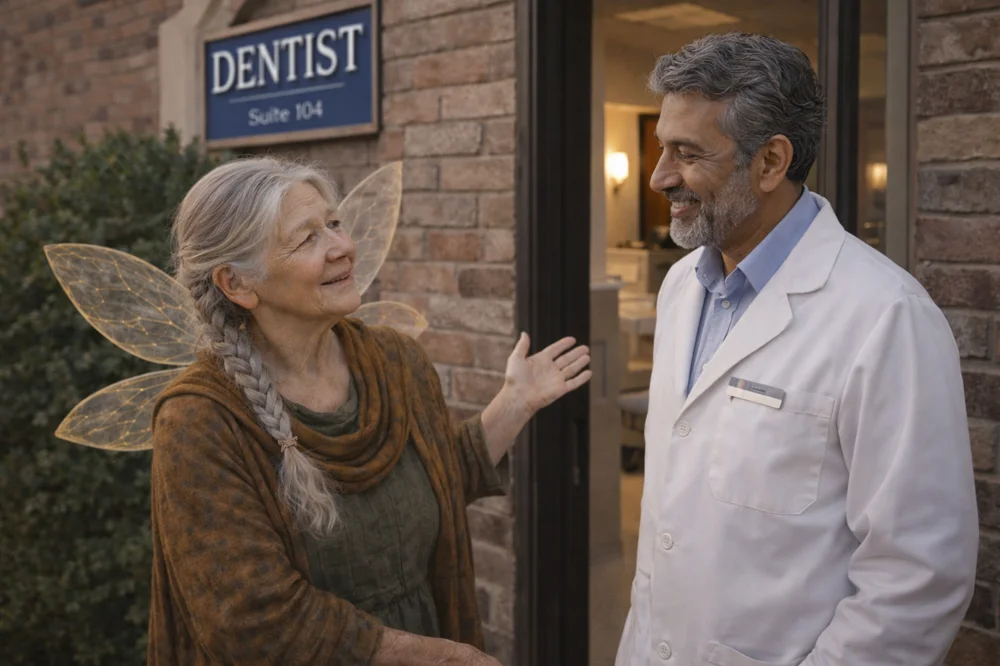
I need to be honest with you now, and this honesty might seem like a contradiction after everything I've told you.
There are things I cannot help you with. There are situations where all the salt rinses and sage tea and careful ecological management in the world will not be enough. There are moments when you need to stop reading this book and go see a dentist.
I've been doing this job for millennia, and I've watched people die from tooth infections. I've watched abscesses spread to the brain. I've watched what starts as a small cavity become a systemic crisis because someone was too afraid, too proud, or too committed to "natural" approaches to seek professional help when professional help was what they needed.
The natural approaches I've described in this book are powerful. They are evidence-based. They represent the accumulated wisdom of countless generations, validated by modern science. But they are primarily preventive and supportive. They are about creating the conditions for health, maintaining balance, optimizing the ecosystem. They are not, in most cases, curative once significant disease has established itself.
Let me be very clear about the boundaries.
The Red Flags: When You Must Seek Care
Some situations require professional intervention regardless of your philosophy about healthcare. These are not suggestions—they are imperatives.
Signs of Acute Infection
If you experience any of the following, you need professional care immediately—within hours, not days:
Facial swelling. If your cheek, jaw, or the area under your eye is visibly swollen, you may have an abscess that is spreading. Dental infections can spread to the fascial spaces of the neck and, from there, to the mediastinum (the space around your heart) or the brain. This can be fatal. I have watched it happen.
Fever accompanying dental pain. A fever means your immune system is fighting a systemic battle. The infection has moved beyond the local site.
Difficulty swallowing or breathing. Swelling in the floor of the mouth or throat can compromise your airway. This is a medical emergency. Ludwig's angina—a severe infection of the sublingual and submandibular spaces—can kill within hours.1
Pus discharge. If you see or taste pus draining from your gums or a tooth, the infection is active and likely beyond what your body can control without help.
Severe, unrelenting pain. Pain that does not respond to over-the-counter medications, that keeps you from sleeping, that makes you desperate—this is your body screaming that something is seriously wrong.
I cannot emphasize this strongly enough: dental infections were a leading cause of death before antibiotics. They can still kill. Natural approaches can support your recovery after professional treatment, but they cannot drain an abscess or eliminate an established infection.
Signs of Advanced Disease
Some conditions have progressed beyond what preventive measures can address:
Teeth that are loose without trauma. If your teeth are mobile, you may have advanced periodontal disease with significant bone loss. This requires professional assessment and likely treatment—scaling and root planing at minimum, possibly surgery.
Gums that have receded significantly. Exposed root surfaces are more vulnerable to decay and sensitivity. While some recession is manageable, severe recession may require grafting.
Persistent sores or white/red patches. Any lesion in your mouth that doesn't heal within two weeks needs professional evaluation. Oral cancer is real, and early detection saves lives.2
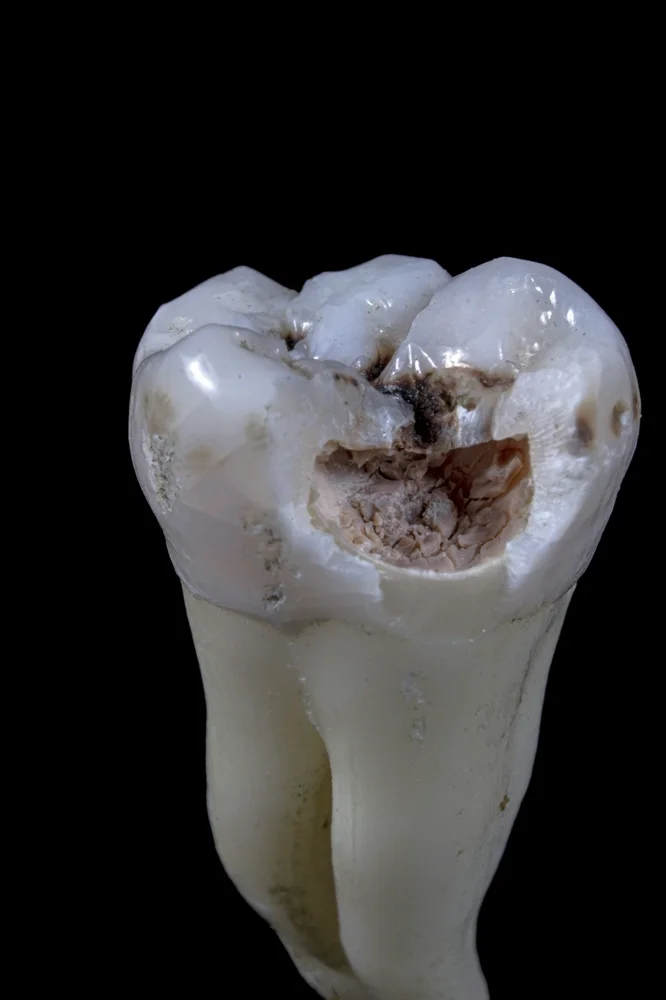
Teeth with visible holes or dark areas. Once a cavity has broken through the enamel surface and created an actual hole, remineralization cannot rebuild it. You need a filling. Delay means the decay spreads deeper, potentially reaching the pulp and requiring root canal treatment—or extraction.
Chronic bad breath despite good hygiene. Persistent halitosis that doesn't respond to the approaches in this book may indicate underlying disease—periodontal pockets, chronic infection, or systemic conditions.
What Dentists Do That You Cannot
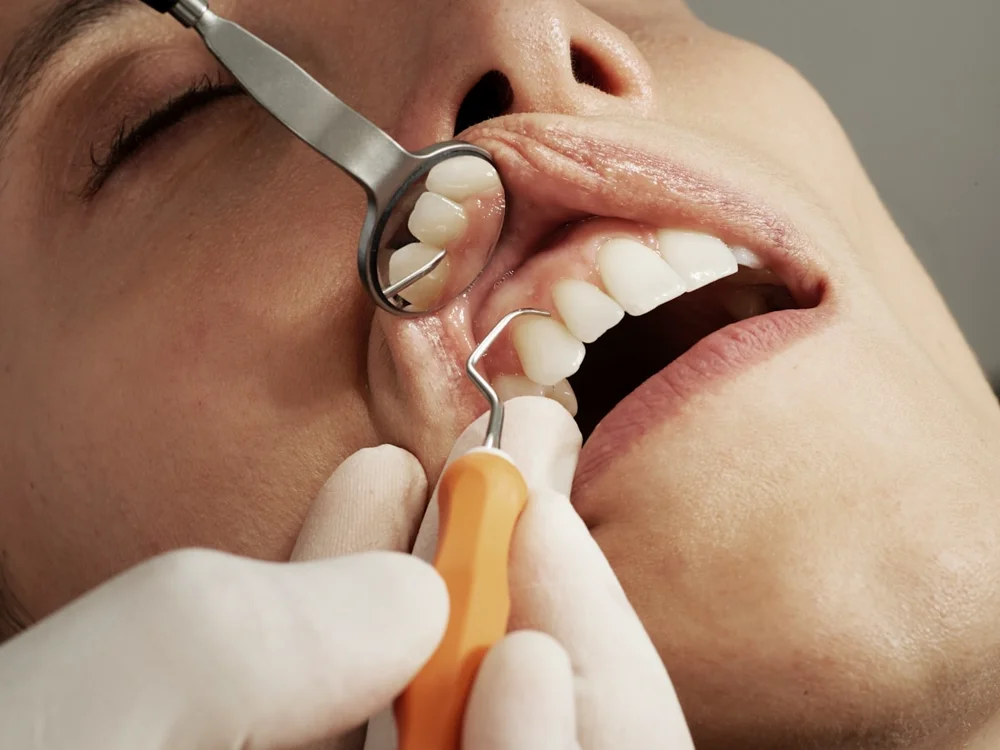
I've been critical of certain aspects of modern dentistry in this book—the over-reliance on antimicrobials, the sometimes mechanical approach to what is fundamentally an ecological problem. But let me be equally clear about what professional dental care provides that no home approach can replicate.
Diagnosis
You cannot see inside your own mouth effectively. You cannot take X-rays. You cannot probe periodontal pockets with calibrated instruments. You cannot distinguish between a small cavity that might remineralize and one that has penetrated the dentin. You cannot identify early oral cancer.
A dental professional can. Regular examinations catch problems when they're still small—when intervention is minimal and outcomes are best.
Mechanical Removal of Calculus
Once plaque has mineralized into calculus (tartar), you cannot remove it yourself. Your toothbrush cannot. Your water flosser cannot. The salt rinse certainly cannot. Calculus is essentially calcium phosphate rock bonded to your tooth surface, and its rough surface provides an ideal habitat for pathogenic bacteria.
Professional scaling—whether manual or ultrasonic—is the only way to remove established calculus. This is not a failure of natural approaches; it's simply a physical reality.
Treatment of Established Decay
Cavities that have broken through the enamel surface require mechanical intervention. The decayed tissue must be removed and the tooth structure restored. There is no herb, no rinse, no amount of remineralization that can regrow a lost cusp or fill a hole that extends into dentin.
Modern dentistry offers increasingly conservative approaches—minimal intervention techniques, biomimetic materials, preservation of tooth structure. But the intervention itself is necessary.
Management of Pulpal Disease
If decay or trauma reaches the dental pulp—the living tissue at the center of your tooth—you face a binary choice: root canal treatment or extraction. There is no natural alternative. The pulp, once infected or necrotic, becomes a reservoir of bacteria with direct access to your bloodstream and bone.
I've collected many teeth that could have been saved with timely root canal treatment—and many teeth that were saved, remaining functional for decades after the procedure. Root canal treatment has an undeservedly poor reputation; in skilled hands, it's often the best way to preserve a tooth.
Surgical Intervention
Some periodontal conditions require surgical access to clean root surfaces effectively. Some wisdom teeth are impacted and will cause problems until removed. Some teeth are fractured below the gumline and cannot be restored.
These situations require professional surgical skills, sterile technique, and appropriate anesthesia. There is no home alternative.
The Integration: Professional Care and Natural Approaches Together
Here's what I want you to understand: this isn't either/or. The best outcomes come from integration.
Before dental procedures: Optimize your oral ecosystem. Healthy, well-nourished tissue heals better. Strong immune function fights infection more effectively. Going into a procedure with a balanced oral microbiome gives you better outcomes.
After dental procedures: This is where natural approaches shine. Post-extraction salt rinses are standard of care for a reason—they work. Gentle ecological management during healing supports tissue repair. Avoiding the disruption of aggressive antimicrobials helps your microbiome recover.
Between dental visits: This is where prevention happens. The daily rhythms, the pH management, the botanical support, the mechanical disruption of biofilm—all of this maintains the health that professional cleanings help establish.
Working with your dentist: Find a professional who respects your interest in ecological approaches. Increasingly, dentists are aware of the microbiome science and are moving beyond the "kill everything" paradigm. A good dentist will partner with you rather than dictate to you.
Special Circumstances Requiring Professional Partnership
Certain life stages require closer professional monitoring, even when nothing seems wrong:
Pregnancy: Hormonal changes dramatically affect gum tissue, and periodontal disease is linked to adverse birth outcomes. A dental cleaning and examination during pregnancy is not just safe—it's recommended. See Chapter 36: Pregnancy and Oral Health for details.
Caring for young children: Early dental visits establish baseline health and catch problems before they become serious. The first visit should happen by age one or within six months of the first tooth. See Chapter 34: Children and Resilient Teeth.
Later years: Medication-induced dry mouth, root caries, and the challenges of adapting care routines all benefit from professional guidance. If you're managing multiple medications, more frequent professional cleanings may be wise. See Chapter 37: Oral Health in Later Years.
A Note on Fear
I must acknowledge something that keeps people from seeking professional care: fear.
I understand. Truly, I do. I've watched dental treatment evolve from its earliest, most brutal forms. I've seen extractions performed without anesthesia, drilling done with foot-powered equipment, procedures that were genuinely traumatic. The fear that many people carry is often ancestral—inherited from generations who experienced dentistry as torture.
Modern dentistry is different. Anesthesia is effective. Techniques are refined. Many procedures are genuinely painless. And dentists increasingly understand that patient anxiety is real and must be addressed.
If fear is keeping you from care:
- Communicate your anxiety to your dental provider
- Ask about sedation options for procedures
- Start with just an examination—no treatment—to build trust
- Seek out practices that specialize in anxious patients
Avoiding care because of fear leads to worse outcomes, more invasive eventual treatment, and more of the experiences that reinforce the fear. The cycle can be broken, but only by taking the first step.
My Final Plea
I've spent this entire book trying to teach you how to keep your teeth. I've shared the science of remineralization, the ecology of the oral microbiome, the botanicals that support health, the rhythms and practices that make a difference.
But none of this replaces the fundamental safety net of professional care.
Get regular examinations. Catch problems early. Address them promptly. Use the natural approaches I've described to optimize the conditions for health—but don't let philosophical commitment to "natural" become an excuse to avoid necessary treatment.
Your teeth are resilient, but they are not infinitely so. Your body is wise, but it cannot regrow enamel that has been destroyed or clear infections that have overwhelmed its defenses. There is no shame in needing help. There is no failure in seeking professional care. There is only the practical reality that some situations require intervention.
I want you to keep your teeth. I want to stop collecting them. But I would rather collect a tooth that was extracted appropriately than watch you suffer with a tooth that should have been treated—or, worse, watch an infection spread because pride or fear or philosophy kept you from the care you needed.
The natural approaches work. The professional interventions work. Together, they work better than either alone.
That's the integration I'm asking you to embrace.
What I've given you in this book is the wisdom of millennia, validated by modern science. What I'm asking you now is to use that wisdom wisely—knowing its power, but also knowing its limits. The goal was never to reject modern dentistry. The goal was to transform it from the only thing you do into one part of a comprehensive approach.
Take care of your mouth. But let your mouth be taken care of when it needs to be.
And if you do all of this well—if you combine the ecological awareness with the professional partnerships, the daily practices with the periodic interventions—then maybe, just maybe, I'll finally get back to my garden, my apothecary, my teaching. The work that waits for me.
I'm not holding my breath. But I'm hoping.
-
Ludwig's angina — Wikipedia. A potentially fatal bacterial infection of the floor of the mouth, typically arising from dental infections. ↩
-
American Cancer Society. (2023). Oral Cavity and Oropharyngeal Cancer Early Detection. Early detection significantly improves survival rates for oral cancers. ↩